headgraphic
loader graphic

Loading content ...

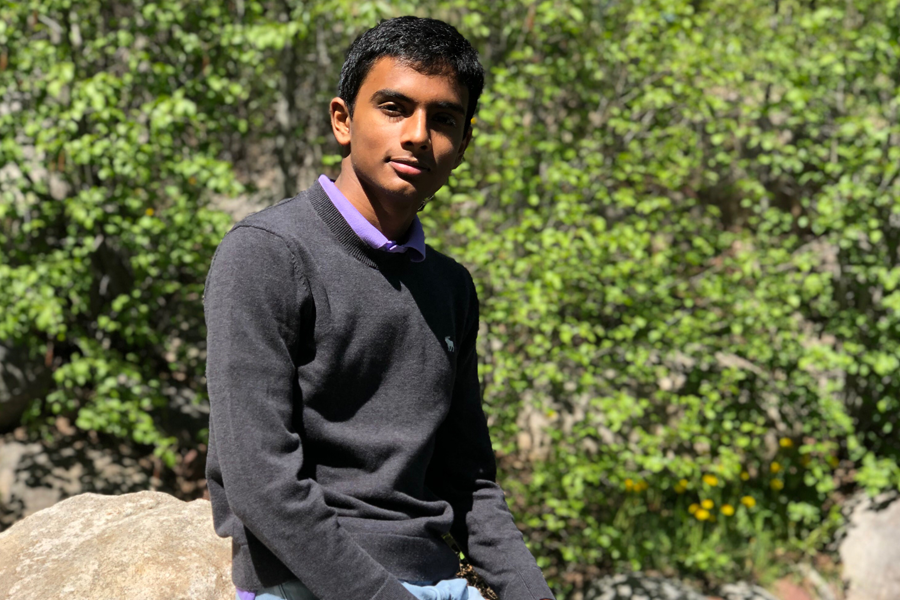
Satya Holla

Satya is an undergraduate freshman at MIT from McAllen, TX, hoping to potentially double major in Computer Science (course 6-3) and Mathematics (course 18). He joined the lab in February 2021, and is currently working on optimal path planning for autonomous vehicles. In his spare time, he enjoys playing volleyball, badminton, and tennis.

Ben Awarded 2021 National Science Foundation (NSF) Graduate Research Fellowship (GRF)

Congratulations to Benjamin Koenig, who has been selected to receive a 2021 Graduate Research Fellowship (GRF) by the National Science Foundation (NSF). His selection as an NSF Graduate Research Fellow is a highly significant national accomplishment and places him among an elite group of fellows who have gone on to distinguished careers in STEM or STEM education. Congratulations Ben!

Interactions of Internal Tides with a Heterogeneous and Rotational Ocean

Pan, Y., P.J. Haley, Jr., and P.F.J. Lermusiaux, 2021. Interactions of Internal Tides with a Heterogeneous and Rotational Ocean. Journal of Fluid Mechanics 920, A18. doi:10.1017/jfm.2021.423

We consider the interactions of internal tides (ITs) with a dynamic, rotational, and heterogeneous ocean, and spatially varying topography. The IT fields are expanded using vertical modal basis functions, whose amplitudes vary horizontally and temporally. We obtain the evolution equations of modal amplitudes and energy including simultaneous three-way interactions with the mean flow, buoyancy, and topography. We apply these equations to a set of idealized and two realistic data-assimilative primitive equation simulations. These simulations reveal that significant interactions of ITs with the background fields occur at topographic features and strong currents, in particular when the scales of the background and ITs are similar. In local hot-spots, the new three-way interaction terms when compared to the total modal conversion are found to reach up to 10-30% at steep topography and about 50% in the Gulf Stream. We provide a dimensional analysis to guide the diagnosis of such strong interactions. When IT interactions are with a large-scale barotropic current (without topographic effects), our modal energy equation reduces to the conservation of modal wave action under a WKB consideration. We further derive analytical solutions of the modulation of wavenumber and energy of an IT propagating into a collinear current. For ITs propagating along the flow direction, the wavelength is stretched and the amplitude is reduced, with the degree of modulation determined by |f0|, the ratio of inertial to tidal frequencies. For ITs propagating opposite to the flow direction, a critical value of |f0| exists, below and above which the waves show remarkably different behaviors. The critical opposing current speed which triggers the wave focusing/blocking phenomenon is obtained and its implication on the propagation and dissipation of ITs is discussed.

Coastal Circulation and Water Transport Properties of the Red Sea Project Lagoon

Zhan, P., G. Krokos, S. Langodan, D. Guo, H. Dasari, V.P. Papadopoulos, P.F.J. Lermusiaux, O.M. Knio, and I. Hoteit, 2021. Coastal Circulation and Water Transport Properties of the Red Sea Project Lagoon. Ocean Modelling 161, 101791. doi:10.1016/j.ocemod.2021.101791

The Red Sea Project (RSP) is based on a coastal lagoon with over 90 pristine islands. The project intends to transform the Red Sea coast into a world-class tourist destination. To better understand the regional dynamics and water exchange scenarios in the lagoon, a high-resolution numerical model is implemented. The general and tidal circulation dynamics are then investigated with a particular focus on the response of the lagoon to strong wind jets. Significant variations in winter and summer circulation patterns are identified. The tidal amplitude inside the lagoon is greater than that outside, with strong tidal currents passing over its surrounding coral reef banks. The lagoon rapidly responds to the strong easterly wind jets that occur mainly in winter; it develops a reverse flow at greater depths, and the coastal water elevation is instantly affected. Lagrangian particle simulations are conducted to study the residence time of water in the lagoon. The results suggest that water renewal is slow in winter. Analysis of the Lagrangian coherent structures (LCS) reveals that water renewal is largely linked to the circulation patterns in the lagoon. In winter, the water becomes restricted in the central lagoon with only moderate exchange, whereas in summer, more circulation is observed with a higher degree of interaction between the central lagoon and external water. The results of LCS also highlight the tidal contribution to stirring and mixing while identifying the hotspots of the phenomenon. Our analysis demonstrates an effective approach for studying regional water mixing and connectivity, which could support coastal management in data-limited regions.

Abhinav wins CCSE Student Poster Session Best Poster Award

Abhinav Gupta’s poster “Neural Closure Models for Dynamical Systems” has won the Best Poster Award at the annual CCSE Student Poster Session. The poster session was part of the 2021 MIT CCSE Symposium, which took place in a virtual format on March 15, 2021 through a combination of Zoom and Gather platforms. The website of the symposium may be found here. Congratulations to Abhinav!

The poster is available here. A preprint of the paper containing his work is available here.