
headgraphic
loader graphic

Loading content ...

Advancing Earth System Predictability with Machine Learning Methods (SIAM MPE Community Meetings: Colloquium)

Speaker: Dr. Dan Lu
[Announcement (PDF)]

Speaker Affiliation: Senior Staff Scientist, Computational Earth Science Group, Oak Ridge National Laboratory
Date: Thursday, November 30, 2023 at 11 a.m. on Zoom

Abstract: Understanding and predicting the Earth system have profound impacts on both society and environments. Despite its importance, Earth system prediction presents significant challenges. The current observing system captures only a fragment of the Earth’s complexity, necessitating reliance on Earth system models to bridge the gaps in space, time, and spectral regions not covered by observations. Over time, these models have evolved remarkably—from empirical, to theoretical, to computational, and now are moving to data-driven machine learning (ML) approaches. In this seminar, we will explore a range of ML methodologies to enhance Earth system predictability. The topics include surrogate modeling, inversion-free prediction, and invertible neural networks to reduce computational costs of numerical Earth system model simulation and uncertainty quantification, and physics-informed, explainable, and trustworthy ML techniques to advance data-driven Earth system predictions. The applications of these methods cover terrestrial ecosystem model, hydrological model, and geological carbon storage.

Biography: Dr. Dan Lu is a Senior Staff Scientist in Computational Earth Sciences Group at Oak Ridge National Laboratory (ORNL). She earned her Ph.D. in Computational Hydrology at Florida State University in 2012, and joined ORNL in 2013 after one-year postdoctoral appointment at the U. S. Geological Survey. Her research interest includes machine learning, uncertainty quantification, surrogate modeling, inverse modeling, sensitivity analysis; experimental design, and numerical simulations in earth, climate, and environment sciences. She is leading several ML related projects funded by different programs across U.S. Department of Energy. She is currently serving as an Associate Editor of the journal Artificial Intelligence for the Earth Systems, an Associate Editor of the journal Frontiers in Water, and a Topic Editor of the journal Geoscientific Model Development.
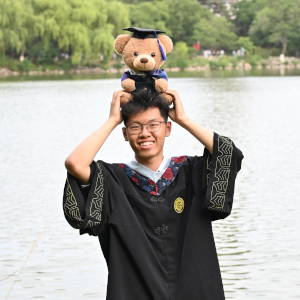

Ruizhe Huang


Ruizhe joined MSEAS in fall 2023 as an SM student. His current research is on modeling submesoscale physics and dynamics in the ocean. Prior to joining MIT, Ruizhe received his Bachelor’s with Honors in Theoretical and Applied Mechanics from Peking University, China. Apart from academia, he loves movies, hiking, and going to the gym to run and lift weights.

Broadband Acoustical Scattering in Coastal Environments: Application to Gelatinous Organisms and Gas Microbubbles

Speaker: Rachel Kahn
[Announcement (PDF)]

Speaker Affiliation: Joint Program in Oceanography/Applied Ocean Science & Engineering
Woods Hole Oceanographic Institute (WHOI)

Date: Friday, October 27, 2023 at 1 p.m. in 5-314
Zoom: https://mit.zoom.us/j/94953046473

Abstract: Broadband acoustical technology revolutionized our ability to explore, monitor, and operate in the ocean. While strides have been made in numerous physical and biological applications, there remain many standing scientific questions well suited to broadband approaches. Physics-based sound scattering models allow us to interpret and draw quantitative observations from measurements. Such models have been developed and used to assess the biomass of many types of marine organisms of ecological significance, but we lack rigorous scattering models for gelatinous organisms despite their possibly accounting for a significant proportion of global marine biomass. Additionally, acoustical techniques for characterizing microbubble populations have been established for decades, yet little is known about the spectral characteristics of dense microbubble clouds associated with estuarine tidal fronts. These bubbles facilitate air-sea gas exchange and could interfere with acoustical operations in coastal environments; however, the density and size distribution of the bubbles must be known to assess their impacts. This dissertation addresses these deficiencies in our application of broadband techniques. In Chapter 2, a sound scattering model for gelatinous organisms is developed based on the Distorted Wave Born Approximation. The 3-D model is applied to a species of scyphomedusa and verified with laboratory measurements of broadband backscattering from live individuals. The model predicts backscattering levels and broad spectral behavior within <2 dB. In Chapter 3, a towable instrument is developed for measuring broadband excess attenuation from bubbles from which the size distribution is inferred. The instrument is tested under breaking waves in a laboratory wave tank and then used to characterize the bubble size distribution in the Connecticut River ebb plume front. Bubbles in the front followed a -3/2 power law like bubbles under breaking waves in the open ocean. In Chapter 4, broadband backscattering measurements from the Connecticut River front are used to infer the associated bubble size distribution. Spatial trends in the bubble distribution are examined within the context of frontal kinematics. The bubble distribution decreased in magnitude with depth and horizontal distance from the front and steepened within ~10 m behind it, indicating that a combination of kinematics and dissolution are driving the bubble distribution.

Biography: Rachel Kahn is a PhD candidate in the MIT and Woods Hole Oceanographic (WHOI) Joint Program. She received her B.A. with Physics major/Biology minor from Scripps College in 2017. She is a student in Dr. Andone Lavery’s laboratory at WHOI.

Stochastic Sea Ice Modeling with the Dynamically Orthogonal Equations

Suresh Babu, A.N., 2023. Stochastic Sea Ice Modeling with the Dynamically Orthogonal Equations. SM Thesis, Massachusetts Institute of Technology, Mechanical Engineering, September 2023.

Accurate numerical models are essential to predict the complex evolution of rapidly changing sea ice conditions and study impacts on climate and navigation. However, sea ice models contain uncertainties associated with initial conditions and forcing (wind, ocean), as well as with parameter values, functional forms of the constitutive relations, and state variables themselves, all of which limit predictive capabilities. Due to the multiple types and scales of sea ice and the complex nonlinear mechanics and high dimensionality of differential equations, efficient ocean and sea ice probabilistic modeling, Bayesian inversion, and machine learning are challenging. In this work, we implement a deterministic 2D viscoplastic sea ice solver and derive and implement new sea ice probabilistic models based on the dynamically orthogonal (DO) equations.

We focus on the stochastic two-dimensional sea ice momentum equations with nonlinear viscoplastic constitutive law. We first implement and verify a deterministic 2D viscoplastic sea ice solver. Next, we derive the new stochastic Sea Ice Dynamically Orthogonal equations and develop numerical schemes for their solution. These equations and schemes preserve nonlinearities in the underlying spatiotemporal dynamics and evolve the non-Gaussianity of the statistics. We evaluate and illustrate the new stochastic sea ice modeling and schemes using idealized stochastic test cases. We employ two stochastic test cases with different types of sea ice: ice sheets and frozen ice cover with uncertain initial velocities. We showcase the ability to evolve non-Gaussian statistics and capture complex nonlinear dynamics efficiently. We study the convergence to the physical discretization, and stochastic convergence to the stochastic subspace size and coefficient samples. Finally, we assess and show significant computational and memory efficiency compared to the direct Monte Carlo method.

The Future of Forecasts: Earth System Prediction in the 21st Century (SIAM MPE Community Meetings: Inaugural Colloquium)

Speaker: Dr. Antonio J. Busalacchi
[Announcement (PDF)]

Speaker Affiliation: President, University Corporation for Atmospheric Research (UCAR), Boulder, CO
Date: Thursday, October 26, 2023 at 11 a.m. on Zoom

Abstract: Coming out of WWII, our knowledge of the physics and dynamics of the atmosphere together with the advent of digital computing ushered in the present era of numerical weather prediction. Today, we find ourselves at a similar juncture. Decades of observations from the Earth Observing System, related understanding of Earth System Science and Earth as a coupled system, combined with the prospect of exascale computing, have placed us on the cusp of a new era of Earth System Prediction.

At the other end of the temporal spectrum far away from day to day weather prediction, climate change projections from decades to centuries have served as the basis for policy decisions on how best to respond to ever increasing levels of greenhouse gases. In between weather prediction and climate change projections is a spectral gap of subseasonal to decadal in which numerous infrastructure, investment, and policy decisions are made. Society requires expanded prediction capabilities and future environmental products beyond the bounds of weather prediction for areas such as coastal oceans, marine and terrestrial ecosystems, agriculture, air and water quality, regional COand other chemical constituents, and environmental health parameters.

Development of an environmental prediction capability will require incorporation of additional components of the Earth System beyond the physical climate system such as biological properties of terrestrial and ocean ecosystems and an assessment of the limits to their predictability. The core elements and expertise needed in this regard include atmospheric general circulation models, ocean circulation models, land surface models, interactive vegetation models, marine ecosystem models, atmospheric chemistry models, global carbon cycle models, assimilation techniques for atmosphere-ocean-land, population dynamics, crop models, infectious disease models and modules to name a few. The challenge now is to bring these core elements together within a common infrastructure and with a central focus on subseasonal to decadal prediction of the Earth System in the broadest sense. Furthermore, the prospect of Earth System prediction has unique policy relevance at both the national and international levels with respect to agriculture, hydrology, ocean resources, energy, transportation, commerce, health, and global security.

Biography: Antonio J. Busalacchi became president of UCAR in August 2016. An expert in Earth’s climate system and ocean-atmosphere interactions, he helps guide NCAR’s world-leading research into the Earth system sciences and its support of the research community through supercomputing, observing instruments, and community models.
