
headgraphic
loader graphic

Loading content ...

Adaptive Stochastic Reduced-Order Modeling for Autonomous Ocean Platforms

Ryu, Y.H., 2022. Adaptive Stochastic Reduced-Order Modeling for Autonomous Ocean Platforms. SM Thesis, Massachusetts Institute of Technology, Computational Science and Engineering, September 2022.

Onboard forecasting and data assimilation are challenging but essential for unmanned autonomous ocean platforms. Due to the numerous operational constraints for these platforms, efficient adaptive reduced-order models (ROMs) are needed. In this thesis, we first review existing approaches and then develop a new adaptive Dynamic Mode Decomposition (DMD)-based, data-driven, reduced-order model framework that provides onboard forecasting and data assimilation capabilities for bandwidth-disadvantaged autonomous ocean platforms. We refer to the new adaptive ROM as the incremental, stochastic Low-Rank Dynamic Mode Decomposition (iLRDMD) algorithm. Given a set of high-fidelity and high-dimensional stochastic forecasts computed in remote centers, this framework enables i) efficient and accurate send and receive of the high-fidelity forecasts, ii) incremental update of the onboard reduced-order model, iii) data-driven onboard forecasting, and iv) onboard ROM data assimilation and learning. We analyze the computational costs for the compression, communications, incremental updates, and onboard forecasts. We evaluate the adaptive ROM using a simple 2D flow behind an island, both as a test case to develop the method, and to investigate the parameter sensitivity and algorithmic design choices. We develop the extension of deterministic iLRDMD to stochastic applications with uncertain ocean forecasts. We then demonstrate the adaptive ROM on more complex ocean fields ranging from univariate 2D, univariate 3D, and multivariate 3D fields from multi-resolution, data-assimilative Multidisciplinary Simulation, Estimation, and Assimilation Systems (MSEAS) reanalyses, specifically from the real-time exercises in the Middle Atlantic Bight region. We also highlight our results using the Navy’s Hybrid Coordinate Ocean Model (HYCOM) forecasts in the North Atlantic region. We then apply the adaptive ROM onboard forecasting algorithm to interdisciplinary applications, showcasing adaptive reduced-order forecasts for onboard underwater acoustics computations and forecasts, as well as for exact time-optimal path-planning with autonomous surface vehicles.

For stochastic forecasting and data assimilation onboard the unmanned autonomous ocean platforms, we combine the stochastic ensemble DMD method with the Gaussian Mixture Model – Dynamically Orthogonal equations (GMM-DO) filter. The autonomous platforms can then perform principled Bayesian data assimilation onboard and learn from the limited and gappy ocean observation data and improve onboard estimates. We extend the DMD with the GMM-DO filter further by incorporating incremental DMD algorithms so that the stochastic ensemble DMD model itself is updated with new measurements. To address some of the inefficiencies in the first combination of the stochastic ensemble DMD with the GMM-DO filter, we further introduce the GMM-DMD algorithm. This algorithm not only uses the stochastic ensemble DMD as a computationally efficient forward model, but also employs the existing decomposition to fit the GMM to and perform Bayesian updates on. We demonstrate this incremental stochastic ensemble DMD with GMM-DO and GMMDMD using a real at-sea application in the Middle Atlantic Bight region. We employ a 300 member set of stochastic ensemble forecasts for the “Positioning System for Deep Ocean Navigation – Precision Ocean Interrogation, Navigation, and Timing” (POSYDON-POINT) sea experiment, and highlight the capabilities of reduced data assimilation using simulated twin experiments.
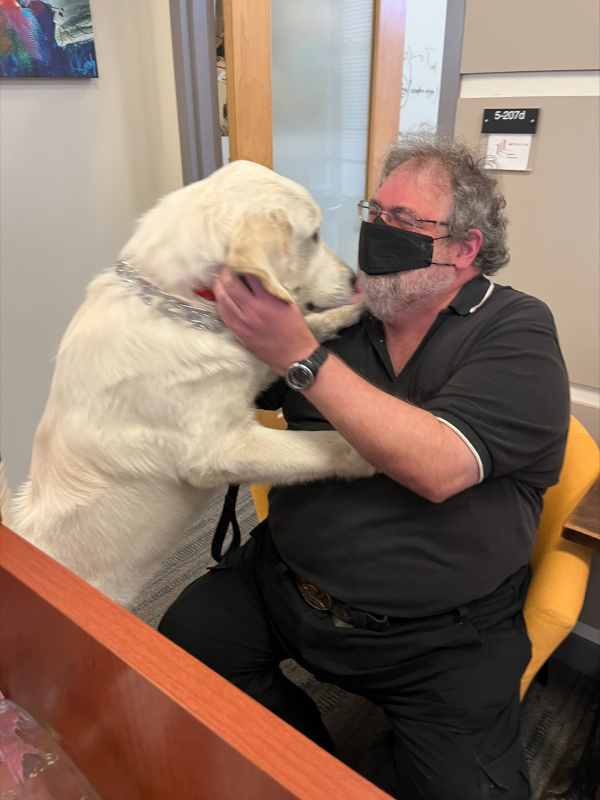
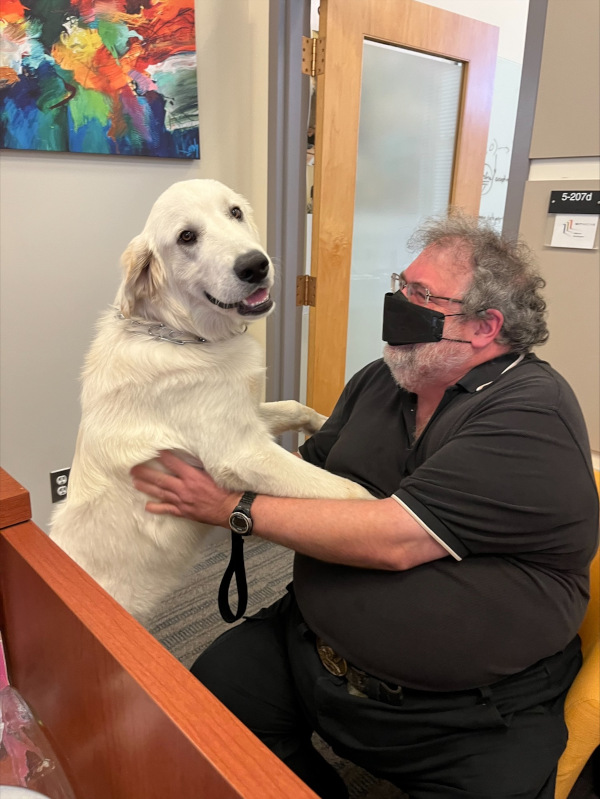
Words don’t describe…

Pat and Marco!!

Yuanzhe Wei

Yuanzhe joined MSEAS in the fall of 2022 as a 4th year undergraduate majoring in applied mathematics with a broad interest in both theory and application. He is a transfer student from Southern University of Science and Technology (SUSTech) to MIT in the Special Student Program. He is now doing a UROP project in MSEAS using Hamilton-Jacobi Equation to solve optimal path planning problems in the ocean. Before coming to MIT, he was doing research on Hyperbolic Conservation Laws and stability analysis of Runge-Kutta Methods. Outside academia, he is a good violin player and enjoys sketching.

His publications so far include:

Z. Sun, Y. Wei, and K. Wu, On Energy Laws and Stability of Runge–Kutta Methods for Linear Seminegative Problems, SIAM Journal on Numerical Analysis, 60(5):2448–2481, 2022. https://epubs.siam.org/doi/10.1137/22M1472218

A Framework for Machine Learning of Model Error in Dynamical Systems

Speaker: Matthew Levine
[Announcement (PDF)]

Speaker Affiliation: Ph.D. Candidate
Computing and Mathematical Sciences
California Institute of Technology
Date: Friday, October 28, 2022 at 3 p.m. in 5-314 and Zoom

Abstract: The development of data-informed predictive models for dynamical systems is of widespread interest in many disciplines. Here, we present a unifying framework for blending mechanistic and machine-learning approaches for identifying dynamical systems from data. This framework is agnostic to the chosen machine learning model parameterization, and casts the problem in both continuous- and discrete-time. We will also show recent developments that allow these methods to learn from noisy, partial observations. We first study model error from the learning theory perspective, defining the excess risk and generalization error. For a linear model of the error used to learn about ergodic dynamical systems, both excess risk and generalization error are bounded by terms that diminish with the square-root of T (the length of the training trajectory data). In our numerical examples, we first study an idealized, fully-observed Lorenz system with model error, and demonstrate that hybrid methods substantially outperform solely data-driven and solely mechanistic-approaches. Then, we present recent results for modeling partially observed Lorenz dynamics that leverages both data assimilation and neural differential equations.

Biography: Matthew Levine is a graduate student in computing and mathematical sciences at Caltech. His work focuses on improving the prediction and inference of physical systems by blending machine learning, mechanistic modeling, and data assimilation techniques. He aims to build robust, unifying theory for these approaches, as well as develop concrete applications. He has worked substantially in the biomedical sciences, and enjoy collaborating on impactful applied projects.

Transport and Mixing by Quasi-Coherent Ocean Structures

Speaker: Michael Denes
[Announcement (PDF)]

Speaker Affiliation: Ph.D. Candidate
School of Mathematics and Statistics
University of New South Wales
Date: Friday, October 21, 2022 at 3 p.m. in 5-314

Abstract: The ocean is dominated by kinematic features, such as gyres, fronts, and mesoscale eddies, that persist for much longer than typical dynamical timescales. Due to their capacity to transport heat, salt, carbon, and other biogeochemical tracers over long distances, these coherent structures play an important role in climate, biology, and small-scale mixing. However, because of their Lagrangian (or flow-following) nature, identifying and tracking these features, and ultimately quantifying their contribution to transport processes, is challenging. In this talk, I will examine transport and mixing in the ocean by coherent structures through the framework of finite-time coherent sets. Coherent sets describe regions of phase space that minimise mixing along their boundaries over a finite time window. They identify barriers to transport and provide the skeleton around which more complex or turbulent dynamics occurs. I will present the results of three applications of the framework to: (i) study the persistence and material coherence of an Agulhas ring; (ii) extend the framework to domains containing multiple ocean eddies; and (iii) investigate and quantify cross-front transport in the Southern Ocean.

Biography: Michael Denes is a Ph.D. student in the School of Mathematics and Statistics at the University of New South Wales, supervised by Professor Gary Froyland and Dr Shane Keating. He holds a BSc. (Honours 1) in Applied Mathematics and Computer Science from the University of Sydney. His current research interests include mathematical oceanography, geophysical fluid dynamics, and dynamical systems.