headgraphic
loader graphic

Loading content ...

MSEAS Celebrates Dr. Jing Lin’s PhD

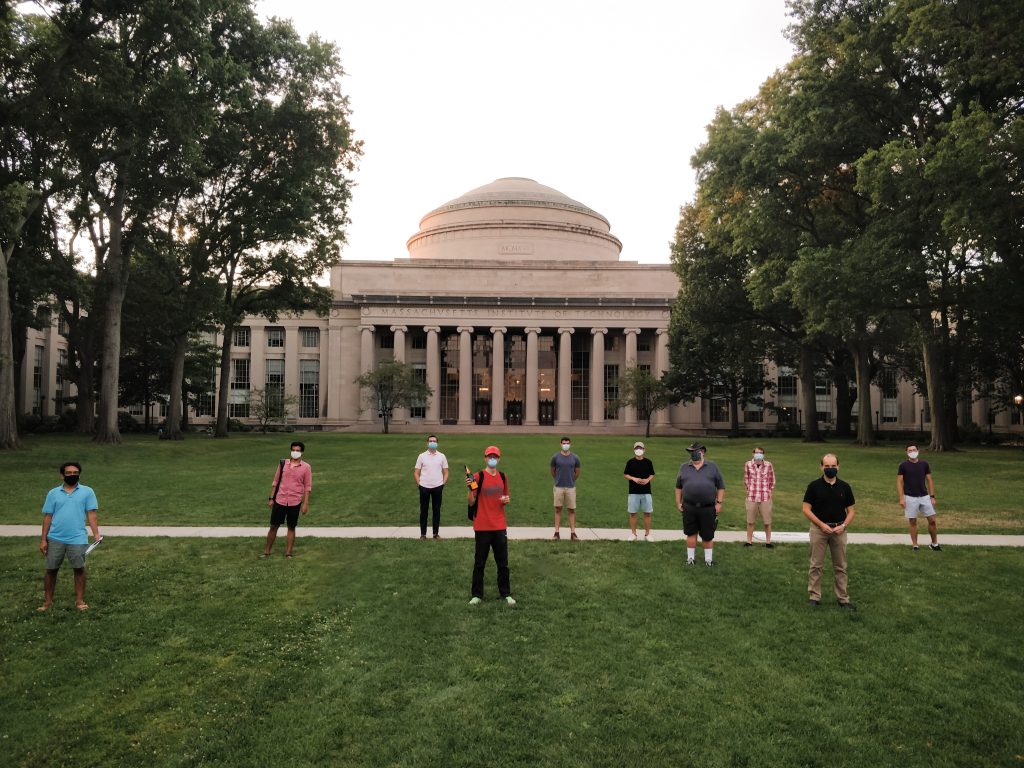
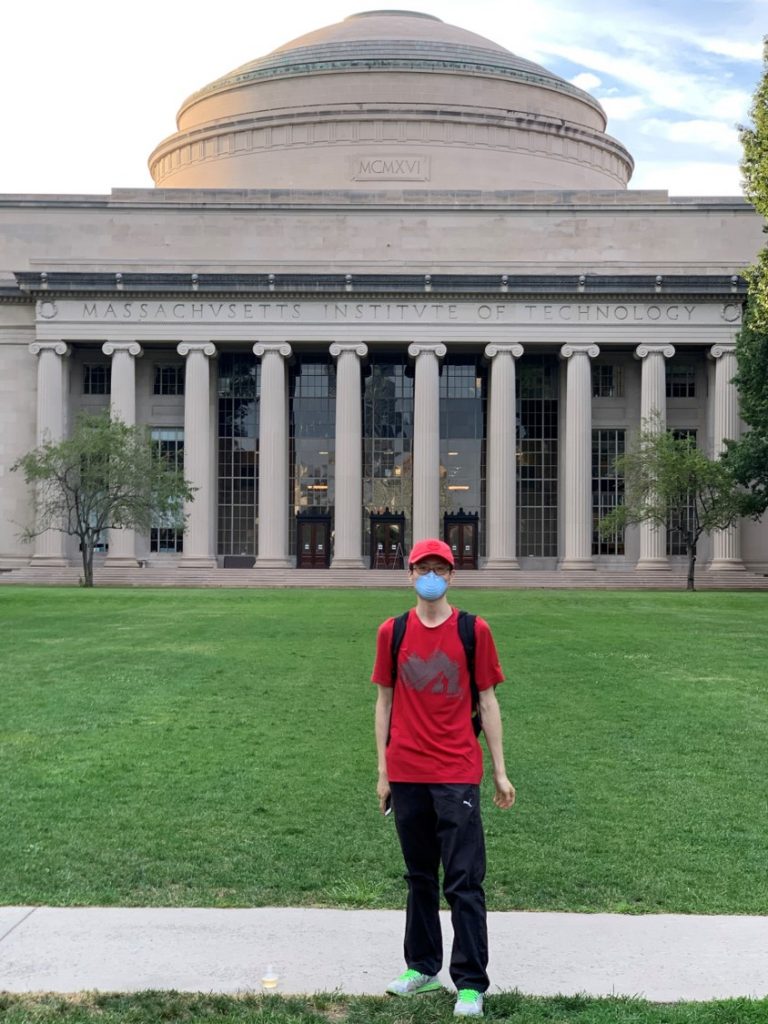
MSEAS member Jing Lin succesfully defended his PhD on August 14, 2020 and the group gathered in the Killian Court to celebrate!

Before Jing’s departure from the US, he and several other MSEAS members went to the zoo.

Congratulations Dr. Jing! We wish you all the best going forward!

Real-time Probabilistic Coupled Ocean Physics-Acoustics Forecasting and Data Assimilation for Underwater GPS

Lermusiaux, P.F.J., C. Mirabito, P.J. Haley, Jr., W.H. Ali, A. Gupta, S. Jana, E. Dorfman, A. Laferriere, A. Kofford, G. Shepard, M. Goldsmith, K. Heaney, E. Coelho, J. Boyle, J. Murray, L. Freitag, and A. Morozov, 2020. Real-time Probabilistic Coupled Ocean Physics-Acoustics Forecasting and Data Assimilation for Underwater GPS. In: OCEANS '20 IEEE/MTS, 5-30 October 2020, pp. 1-9. doi:10.1109/IEEECONF38699.2020.9389003

The widely-used Global Positioning System (GPS) does not work underwater. This presents a severe limitation on the communication capabilities and deployment options for undersea assets such as AUVs and UUVs. To address this challenge, the Positioning System for Deep Ocean Navigation (POSYDON) program aims to develop an undersea system that provides omnipresent, robust positioning across ocean basins. To do so, it is critically important to accurately model sound waves and signals under diverse, and often uncertain, undersea environmental conditions. Probabilistic estimates of the four-dimensional variability of the fields of sound speed, salinity, temperature, and currents are thus needed. In this paper, we employ our MSEAS primitive-equation and error subspace data-assimilative ensemble ocean forecasting system during two real-time POSYDON sea exercises, one in winter 2017 and another in August 2018. We provide real-time high-resolution estimates of sound speed fields and their uncertainty, and describe the ocean conditions from submesoscales eddies and internal tides to warm core rings and larger-scale circulations. We verify our results against independent data of opportunity; in all cases, we show that our probabilistic forecasts demonstrate skill.

Multi-resolution Probabilistic Ocean Physics-Acoustic Modeling: Validation in the New Jersey Continental Shelf

Lermusiaux, P.F.J., P.J. Haley, Jr., C. Mirabito, W.H. Ali, M. Bhabra, P. Abbot, C.-S. Chiu, and C. Emerson, 2020. Multi-resolution Probabilistic Ocean Physics-Acoustic Modeling: Validation in the New Jersey Continental Shelf. In: OCEANS '20 IEEE/MTS, 5-30 October 2020, pp. 1-9. doi:10.1109/IEEECONF38699.2020.9389193

The reliability of sonar systems in the littoral environment is greatly affected by the variability of the surrounding nonlinear ocean dynamics. This variability occurs on multiple scales in space and time, and involves multiple interacting processes, from internal tides and waves to meandering fronts, eddies, boundary layers, and strong air-sea interactions. We utilize our high-resolution MSEAS-PE ocean modeling system to hindcast the ocean physical environment off the New Jersey continental shelf for the end of June 2009, and then utilize our new MSEAS probabilistic acoustic NAPE and WAPE solvers in a coupled ocean physics-acoustic modeling fashion to predict the transmission and integrated transmission losses, respectively. The coupled models are described, and their predictions verified against independent ocean physics observations and sound propagation measurements from acoustic sources and receivers in the region. Our high-resolution ocean simulations are shown to substantial reduce the RMSE and bias of the coarser simulations. Our acoustic simulations of deterministic and stochastic TL fields also show significant skill.

Towards Bayesian Ocean Physical-Biogeochemical-Acidification Prediction and Learning Systems for Massachusetts Bay

Haley, Jr., P.J., A. Gupta, C. Mirabito, and P. F. J. Lermusiaux, 2020. Towards Bayesian Ocean Physical-Biogeochemical-Acidification Prediction and Learning Systems for Massachusetts Bay. In: OCEANS '20 IEEE/MTS, 5-30 October 2020, pp. 1-9, doi:10.1109/IEEECONF38699.2020.9389210

Better quantitative understanding and accurate data-assimilative predictions of the three-dimensional and time-dependent ocean acidification (OA) processes in coastal regions is urgently needed for the protection and sustainable utilization of ocean resources. In this paper, we extend and showcase the use of our MIT-MSEAS systems for high-resolution coupled physical-biogeochemical-acidification simulations and Bayesian learning of OA models in Massachusetts Bay, starting with simple empirical and equilibrium OA models. Simulations are shown to have reasonable skill when compared to available in situ and remote data. The impacts of wind forcing, internal tides, and solitary waves on water transports and mixing, and OA fields, are explored. Strong wind events are shown to reset circulations and the OA state in the Bay. Internal tides increase vertical mixing of waters in the shallow regions. Solitary waves propagating off Stellwagen Bank coupled with lateral turbulent mixing provide a pathway for exchange of surface and deep waters. Both of these effects are shown to impact biological activity and OA. A mechanism for the creation of multiple subsurface chlorophyll maxima is presented, involving wind-induced upwelling, internal tides, and advection of near surface fields. Due to the measurement sparsity and limited understanding of complex OA processes, the state variables and parameterizations of OA models are very uncertain. We thus present a proof-of-concept study to simultaneously learn and estimate the OA state variables and model parameterizations from sparse observations using our novel dynamics-based Bayesian learning framework for high-dimensional and multi-disciplinary estimation. Results are found to be encouraging for more realistic OA model learning.

Optimal Harvesting with Autonomous Tow Vessels for Offshore Macroalgae Farming

Bhabra, M.S., M.M. Doshi, B.C. Koenig, P.J. Haley, Jr., C. Mirabito, P.F.J. Lermusiaux, C.A. Goudey, J. Curcio, D. Manganelli, and H. Goudey, 2020. Optimal Harvesting with Autonomous Tow Vessels for Offshore Macroalgae Farming. In: OCEANS '20 IEEE/MTS, 5-30 October 2020, pp. 1-10. doi:10.1109/IEEECONF38699.2020.9389474

The rising popularity of aquaculture has led to increased research in offshore algae farming. Central to the efficient operation of such farms is the need for (i) accurate models of the dynamic ocean environment including macroalgae ecosystem dynamics and (ii) intelligent path planning algorithms for autonomous vessels that optimally manage and harvest the algae fields. In this work, we address both these challenges. We first integrate our modeling system of the ocean environment with a model for forecasting the growth and decay of algae fields. These fields are then input into our exact optimal path planning, augmented with the optimal harvesting goals and solved using level set methods. The resulting path is a provable time-optimal route for the vehicle to follow under the constraint of having to monitor or harvest a specified amount of the field to collect. To demonstrate the theory, we simulate algal growth in both idealized and realistic data-assimilative dynamic ocean environments and compute the optimal paths for an autonomous collection vehicle. We demonstrate that our theory and schemes can be used to compute the optimal path in a variety of scenarios – harvesting in the case of discrete farms, a large kelp farm field, or large scale dynamic algal bloom fields.