
headgraphic
loader graphic

Loading content ...

SeaVizKit: Interactive Maps for Ocean Visualization

Ali, W.H., M.H. Mirhi, A. Gupta, C.S. Kulkarni, C. Foucart, M.M. Doshi, D.N. Subramani, C. Mirabito, P.J. Haley, Jr., and P.F.J. Lermusiaux, 2019. SeaVizKit: Interactive Maps for Ocean Visualization. In: OCEANS '19 MTS/IEEE Seattle, 27-31 October 2019, doi:10.23919/OCEANS40490.2019.8962794

With the increasing availability of high-resolution comprehensive spatio-temporal ocean models and observation systems, ocean data visualization has become ubiquitous. This is due to the major impact of ocean products on disaster management, shipping, fisheries, autonomy, coastal operations, and scientific studies. Yet, there are several challenges for effective communication of data through visualization techniques. Specifically, ocean data is multivariate (e.g. temperature, salinity, velocity, etc.), is available for multiple depths and multiple time instants, and contains uncertainties, all of which leads to large, multi-dimensional datasets. Thus, it is necessary to have an interactive multiscale multivariate visualization tool that can assist scientists, engineers, policy makers, and the public in making insights from big data produced by ocean predictions and observations. In this work, we present a 3D (spatial) + 1 (temporal) multi-resolution multivariate visualization tool that produces interactive, dynamic, fast and portable ocean maps.
Energy and Momentum Lost to Wake Eddies and Lee Waves Generated by the North Equatorial Current and Tidal Flows at Peleliu, Palau

Johnston, T.M.S., J.A. MacKinnon, P.L. Colin, P.J. Haley, Jr., P.F.J. Lermusiaux, A.J. Lucas, M.A. Merrifield, S.T. Merrifield, C. Mirabito, J.D. Nash, C.Y. Ou, M. Siegelman, E.J. Terrill, A.F. Waterhouse, 2019. Energy and Momentum Lost to Wake Eddies and Lee Waves Generated by the North Equatorial Current and Tidal Flows at Peleliu, Palau, Oceanography 32(4), 110–125. doi:10.5670/oceanog.2019.417

The North Equatorial Current (NEC) transports water westward around numerous islands and over submarine ridges in the western Pacific. As the currents flow over and around this topography, the central question is: how are momentum and energy in the incident flow transferred to finer scales? At the south point of Peleliu Island, Palau, a combination of strong NEC currents and tides flow over a steep, submarine ridge. Energy cascades suddenly from the NEC via the 1 km scale lee waves and wake eddies to turbulence. These submesoscale wake eddies are observed every tidal cycle, and also in model simulations. As the flow in each eddy recirculates and encounters the incident flow again, the associated front contains interleaving temperature (T) structures with 1–10 m horizontal extent. Turbulent dissipation (ε) exceeds 10-5 W kg-1 along this tilted and strongly sheared front. A train of such submesoscale eddies can be seen at least 50 km downstream. Internal lee waves with 1 km wavelengths are also observed over the submarine ridge. The mean form drag exerted by the waves (i.e., upward transport of eastward momentum) of about 1 Pa is sufficient to substantially reduce the westward NEC, if not for other forcing, and is greater than the turbulent bottom drag of about 0.1 Pa. The effect on the incident flow of the form drag from only one submarine ridge may be similar to the bottom drag along the entire coastline of Palau. The observed ε is also consistent with local dissipation of lee wave energy. The circulation, including lee waves and wake eddies, was simulated by a data-driven primitive equation ocean model. The model estimates of the form drags exerted by pressure drops across the submarine ridge and due to wake eddies were found to be about 10 times higher than the lee wave and turbulent bottom drags. The ridge form drag was correlated to both the tidal flow and winds while the submesoscale wake eddy drag was mainly tidal.

Flow Encountering Abrupt Topography (FLEAT): A Multiscale Observational and Modeling Program to Understand how Topography Affects Flows in the Western North Pacific

Johnston, T.M.S., M.C. Schönau, T. Paluszkiewicz, J.A. MacKinnon, B.K. Arbic, P.L. Colin, M.H. Alford, M. Andres, L. Centurioni, H.C. Graber, K.R. Helfrich, V. Hormann, P.F.J. Lermusiaux, R.C. Musgrave, B.S. Powell, B. Qiu, D.L. Rudnick, H.L. Simmons, L. St. Laurent, E.J. Terrill, D.S. Trossman, G. Voet, H.W. Wijesekera, and K.L. Zeiden, 2019. Flow Encountering Abrupt Topography (FLEAT): A multiscale observational and modeling program to understand how topography affects flows in the western North Pacific. Oceanography 32(4):10–21. doi:​10.5670/oceanog.2019.407

Using a combination of models and observations, the US Office of Naval Research Flow Encountering Abrupt Topography (FLEAT) initiative examines how island chains and submerged ridges affect open ocean current systems, from the hundreds of kilometer scale of large current features to the millimeter scale of turbulence. FLEAT focuses on the western Pacific, mainly on equatorial currents that encounter steep topography near the island nation of Palau. Wake eddies and lee waves as small as 1 km were observed to form as these currents flowed around or over the steep topography. The direction and vertical structure of the incident flow varied over tidal, inertial, seasonal, and interannual timescales, with implications for downstream flow. Models incorporated tides and had grids with resolutions of hundreds of meters to enable predictions of flow transformations as waters encountered and passed around Palau’s islands. In addition to making scientific advances, FLEAT had a positive impact on the local Palauan community by bringing new technology to explore local waters, expanding the country’s scientific infrastructure, maintaining collaborations with Palauan partners, and conducting outreach activities aimed at elementary and high school students, US embassy personnel, and Palauan government officials.

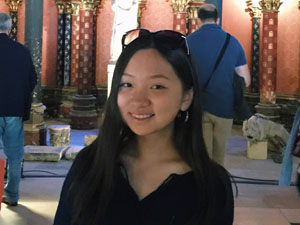
Serena Zhao

Joining MSEAS in June 2019, Serena is a rising high school senior from Manhasset, New York who is extremely passionate about environmental conservation, future sustainability, and the Earth. She has researched areas spanning neurodegenerative disease to environmental engineering, but her primary interests lie in water use and conservation, especially of the oceans. In her free time, Serena enjoys cooking (which is unrelated to oceanic research but yields delicious results), traveling, and working with others to help the environment and spread her passion for the Earth.

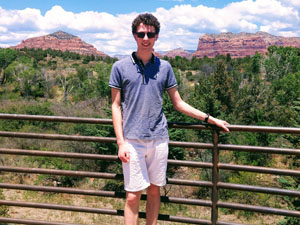
Richard Beattie

Richard is a senior from Dublin, Ireland, participating in the Research Science Institute and hoping to attend university in the United States. He is interested in math and the intersection of computer science and the environment—especially how to build systems that aid ecological data assimilation. Richard has previously worked on a project to build tools that help citizen scientists in Ireland become involved in bat conservation. During his free time he enjoys running, reading and debating.
