headgraphic
loader graphic

Loading content ...

Synthesis of Ocean Observations using Data Assimilation: A More Complete Picture of the State of the Ocean

Moore, A.M., M. Martin, S. Akella, H. Arango, M. Balmaseda, L. Bertino, S. Ciavatta, B. Cornuelle, J. Cummings, S. Frolov, P. Lermusiaux, P. Oddo, P.R. Oke, A. Storto, A. Teruzzi, A. Vidard, and A.T. Weaver, 2019. Synthesis of Ocean Observations using Data Assimilation for Operational, Real-time and Reanalysis Systems: A More Complete Picture of the State of the Ocean. Frontiers in Marine Science 6(90), 1–6. doi:10.3389/fmars.2019.00090

Ocean data assimilation is increasingly recognized as crucial for the accuracy of the real-time ocean prediction systems. Here, the current status of ocean data assimilation in support of the operational demands of analysis and forecasting is reviewed, focusing on the methods currently adopted in operational prediction systems. Significant challenges associated with the most commonly employed approaches are identified and discussed. Overarching issues faced by ocean data assimilation in general are also addressed, and important future directions in response to scientific advances, evolving and forthcoming ocean observing systems and the needs of stakeholders and downstream applications are presented.

Intelligent Systems for Geosciences: An Essential Research Agenda

Gil, Y., S.A. Pierce, H. Babaie, A. Banerjee, K. Borne, G. Bust, M. Cheatham, I. Ebert-Uphoff, C. Gomes, M. Hill, J. Horel, L. Hsu, J. Kinter, C. Knoblock, D. Krum, V. Kumar, P.F.J. Lermusiaux, Y. Liu, C. North, V. Pankratius, S. Peters, B. Plale, A. Pope, S. Ravela, J. Restrepo, A. Ridley, H. Samet, and S. Shekhar, 2019. Intelligent Systems for Geosciences: An Essential Research Agenda. Communications of the ACM, 62(1), 76–84. doi:10.1145/3192335

Many aspects of geosciences pose novel problems for intelligent systems research. Geoscience data is challenging because it tends to be uncertain, intermittent, sparse, multiresolution, and multiscale. Geosciences processes and objects often have amorphous spatiotemporal boundaries. The lack of ground truth makes model evaluation, testing, and comparison difficult. Overcoming these challenges requires breakthroughs that would significantly transform intelligent systems, while greatly benefitting the geosciences in turn. Although there have been significant and beneficial interactions between the intelligent systems and geosciences communities, the potential for synergistic research in intelligent systems for geosciences is largely untapped. A recently launched Research Coordination Network on Intelligent Systems for Geosciences followed a workshop at the National Science Foundation on this topic. This expanding network builds on the momentum of the NSF EarthCube initiative for geosciences, and is driven by practical problems in Earth, ocean, atmospheric, polar, and geospace sciences. Based on discussions and activities within this network, this article presents a research agenda for intelligent systems inspired by geosciences challenges.

Hidden Physics Models: Machine Learning of Non-Linear Partial Differential Equations

Speaker: Maziar Raissi
[Announcement (PDF)]

Speaker Affiliation: Assistant Professor of Applied Mathematics
Division of Applied Mathematics
Brown University

Date: Friday, November 30, 2018 at 3 p.m. in 5-314

AbstractA grand challenge with great opportunities is to develop a coherent framework that enables blending conservation laws, physical principles, and/or phenomenological behaviours expressed by differential equations with the vast data sets available in many fields of engineering, science, and technology. At the intersection of probabilistic machine learning, deep learning, and scientific computations, this work is pursuing the overall vision to establish promising new directions for harnessing the long-standing developments of classical methods in applied mathematics and mathematical physics to design learning machines with the ability to operate in complex domains without requiring large quantities of data. To materialize this vision, this work is exploring two complementary directions: (1) designing data-efficient learning machines capable of leveraging the underlying laws of physics, expressed by time dependent and non-linear differential equations, to extract patterns from high-dimensional data generated from experiments, and (2) designing novel numerical algorithms that can seamlessly blend equations and noisy multi-fidelity data, infer latent quantities of interest (e.g., the solution to a differential equation), and naturally quantify uncertainty in computations. The latter is aligned in spirit with the emerging field of probabilistic numerics.

Biography: Maziar Raissi is currently an Assistant Professor of Applied Mathematics (research) in the Division of Applied Mathematics at Brown University. He received his Ph.D. in Applied Mathematics & Statistics, and Scientific Computations from University of Maryland – College Park in December 2016. His expertise lies at the intersection of Probabilistic Machine Learning, Deep Learning, and Data Driven Scientific Computing. In particular, he has been actively involved in the design of learning machines that leverage the underlying physical laws and/or governing equations to extract patterns from high-dimensional data generated from experiments.

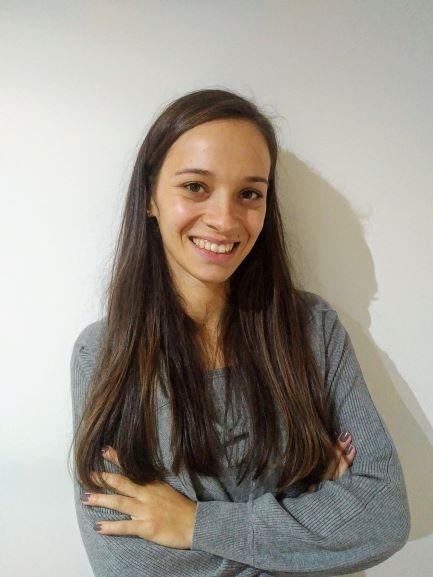
Flavia Barbosa

Flávia Barbosa is a visiting student from Portugal. She received her Master degree in Mechanical Engineering from the School of Engineering of University of Minho in 2015 and she is currently at her 2nd year of PhD. The focus of her research in MSEAS group is numerical simulation and uncertainty quantification. To stay focus and energetic, Flavia enjoys practicing sports in her free times. She is currently working on:
  • Convection from multiple jets over a complex moving surface
Her publications so far include:
  • Barbosa, F.V., Teixeira, J.C.F, Lima, R. A. M. M., Soares, D.F., Pinho, D. M. D., “Rheology of F620 Solder Paste and Flux”, Soldering & Surface Mount Technology, 2018 (accepted manuscript).
  • Barbosa, F.V., Silva, J.P.V., Ribeiro, P.E.A., Teixeira, S.F.C.F., Teixeira, J.C.F., “An Experimental Setup for Multiple Air Jet Impingement over a Surface”, ASME 2018 International Mechanical Engineering Congress and Exposition IMECE 2018, Nov 9 -15, Pittsburgh, Pennsylvania, USA.
  • Barbosa, F.V., Silva, J.P.V., Teixeira, S.F.C.F., Soares, D.F., Santos, D.N.F.S., Delgado, I.A.C.C.F., Teixeira, J.C.F., “Multiple Jet Impingement in Reflow Soldering – A Numerical Approach”, World Conference Engineering 2018, London, UK.
  • Barbosa, F. V., Ribeiro, P. E. A., Cerqueira, M. F., Delfim, F. S., Teixeira, J. C. F., Teixeira, S. F. C. F., Lima, R. A. M. M., Pinho, D. M. D. (2017). Proceedings of the ASME 2017 International Mechanical Engineering Congress and Exposition IMECE 2017, Nov. 3-9, Tampa, Florida, USA.
  • Barbosa, F. V., Teixeira, J. C. F., Vilarinho M. C. L. G., Araújo, J. M. M. G. (2017). Gasification of RDF from MSW – an overview. Proceedings book of the 4th edition of the International Conference WASTES 2017 (p.). Porto.
  • Barbosa, F.V., Afonso, J. L., Rodrigues, F. B., Teixeira & J. C. F. (2016). Development of a solar concentrator with tracking system, Mech. Sci., 7, 233-245, doi:10.5194/ms-7-233-2016, 2016.

MIT –WHOI 50th anniversary

Read more about the MIT-WHOI Joint program and the anniversary here.