
headgraphic
loader graphic

Loading content ...

Extent of Impact of Deep-Sea Nodule Mining Midwater Plumes Is Influenced by Sediment Loading, Turbulence and Thresholds

Muñoz-Royo, C., T. Peacock, M.H. Alford, J. Smith, A. Le Boyer, C.S. Kulkarni, P.F.J. Lermusiaux, P.J. Haley, Jr., C. Mirabito, D. Wang, E. Eric Adams, R. Ouillon, A. Breugem, B. Decrop, T. Lanckriet, R.B. Supekar, A.J. Rzeznik, A. Gartman, and S.-J. Ju, 2021. Extent of Impact of Deep-Sea Nodule Mining Midwater Plumes Is Influenced by Sediment Loading, Turbulence and Thresholds. Nature Communications Earth & Environment 2(148), pp. 1-16. doi:10.1038/s43247-021-00213-8

Deep-sea polymetallic nodule mining research activity has substantially increased in recent years, but the expected level of environmental impact is still being established. One environmental concern is the discharge of a sediment plume into the midwater column. We performed a dedicated field study using sediment from the Clarion Clipperton Fracture Zone. The plume was monitored and tracked using both established and novel instrumentation, including acoustic and turbulence measurements. Our field studies reveal that modeling can reliably predict the properties of a midwater plume in the vicinity of the discharge and that sediment aggregation effects are not significant. The plume model is used to drive a numerical simulation of a commercial-scale operation in the Clarion Clipperton Fracture Zone. Key takeaways are that the scale of impact of the plume is notably influenced by the values of environmentally acceptable threshold levels, the quantity of discharged sediment, and the turbulent diffusivity in the Clarion Clipperton Fracture Zone.

Towards an End-to-End Analysis and Prediction System for Weather, Climate, and Marine Applications in the Red Sea

Hoteit, I., Y. Abualnaja, S. Afzal, B. Ait-El-Fquih, T. Akylas, C. Antony, C. Dawson, K. Asfahani, R.J. Brewin, L. Cavaleri, I. Cerovecki, B. Cornuelle, S. Desamsetti, R. Attada, H. Dasari, J. Sanchez-Garrido, L. Genevier, M. El Gharamti, J.A. Gittings, E. Gokul, G. Gopalakrishnan, D. Guo, B. Hadri, M. Hadwiger, M.A. Hammoud, M. Hendershott, M. Hittawe, A. Karumuri, O. Knio, A. Köhl, S. Kortas, G. Krokos, R. Kunchala, L. Issa, I. Lakkis, S. Langodan, P. Lermusiaux, T. Luong, J. Ma, O. Le Maitre, M. Mazloff, S. El Mohtar, V.P. Papadopoulos, T. Platt, L. Pratt, N. Raboudi, M.-F. Racault, D.E. Raitsos, S. Razak, S. Sanikommu, S. Sathyendranath, S. Sofianos, A. Subramanian, R. Sun, E. Titi, H. Toye, G. Triantafyllou, K. Tsiaras, P. Vasou, Y. Viswanadhapalli, Y. Wang, F. Yao, P. Zhan, and G. Zodiatis, 2021. Towards an End-to-End Analysis and Prediction System for Weather, Climate, and Marine Applications in the Red Sea. Bulletin of the American Meteorological Society 102(1), E99-E122. doi:10.1175/BAMS-D-19-0005.1

The Red Sea, home to the second-longest coral reef system in the world, is a vital resource for the Kingdom of Saudi Arabia. The Red Sea provides 90% of the Kingdom’s potable water by desalinization, supporting tourism, shipping, aquaculture, and fishing industries, which together contribute about 10%–20% of the country’s GDP. All these activities, and those elsewhere in the Red Sea region, critically depend on oceanic and atmospheric conditions. At a time of mega-development projects along the Red Sea coast, and global warming, authorities are working on optimizing the harnessing of environmental resources, including renewable energy and rainwater harvesting. All these require high-resolution weather and climate information. Toward this end, we have undertaken a multipronged research and development activity in which we are developing an integrated data-driven regional coupled modeling system. The telescopically nested components include 5-km- to 600-m-resolution atmospheric models to address weather and climate challenges, 4-km- to 50-m-resolution ocean models with regional and coastal configurations to simulate and predict the general and mesoscale circulation, 4-km- to 100-m-resolution ecosystem models to simulate the biogeochemistry, and 1-km- to 50-m-resolution wave models. In addition, a complementary probabilistic transport modeling system predicts dispersion of contaminant plumes, oil spill, and marine ecosystem connectivity. Advanced ensemble data assimilation capabilities have also been implemented for accurate forecasting. Resulting achievements include significant advancement in our understanding of the regional circulation and its connection to the global climate, development, and validation of long-term Red Sea regional atmospheric–oceanic–wave reanalyses and forecasting capacities. These products are being extensively used by academia, government, and industry in various weather and marine studies and operations, environmental policies, renewable energy applications, impact assessment, flood forecasting, and more.

Dr. Lisa Burton O’Toole receives ASME’s Kate Gleason Award

Dr. Lisa Burton O’Toole, who earned her MS and Ph.D. in Mechanical Engineering at the Massachusetts Institute of Technology, will receive ASME’s Kate Gleason Award, honoring women entrepreneurs who make a significant contribution to the engineering community. She serves as executive director of HearstLab, where she evaluates and invests in women-led startups in media, data, and technology. She will be honored at ASME’s Philanthropic Impact 2020 on November 10.

Ben and Yoland Present Research at MERE 2020

Congratulations to Ben and Yoland for their MERE performance! Ben presented his research on “Optimal Harvesting With Autonomous Tow
Vessels For Offshore Macroalgae Farming”, and received a runner-up prize in the graduate student category. Meanwhile, Yoland presented his research on “3DSeaVizKit: Interactive 3D Visualization Toolkit For Oceanographic Data”, and received a special “MSEAS heart” price from us! Congratulations again to Ben and Yoland!

Chinmay Kulkarni

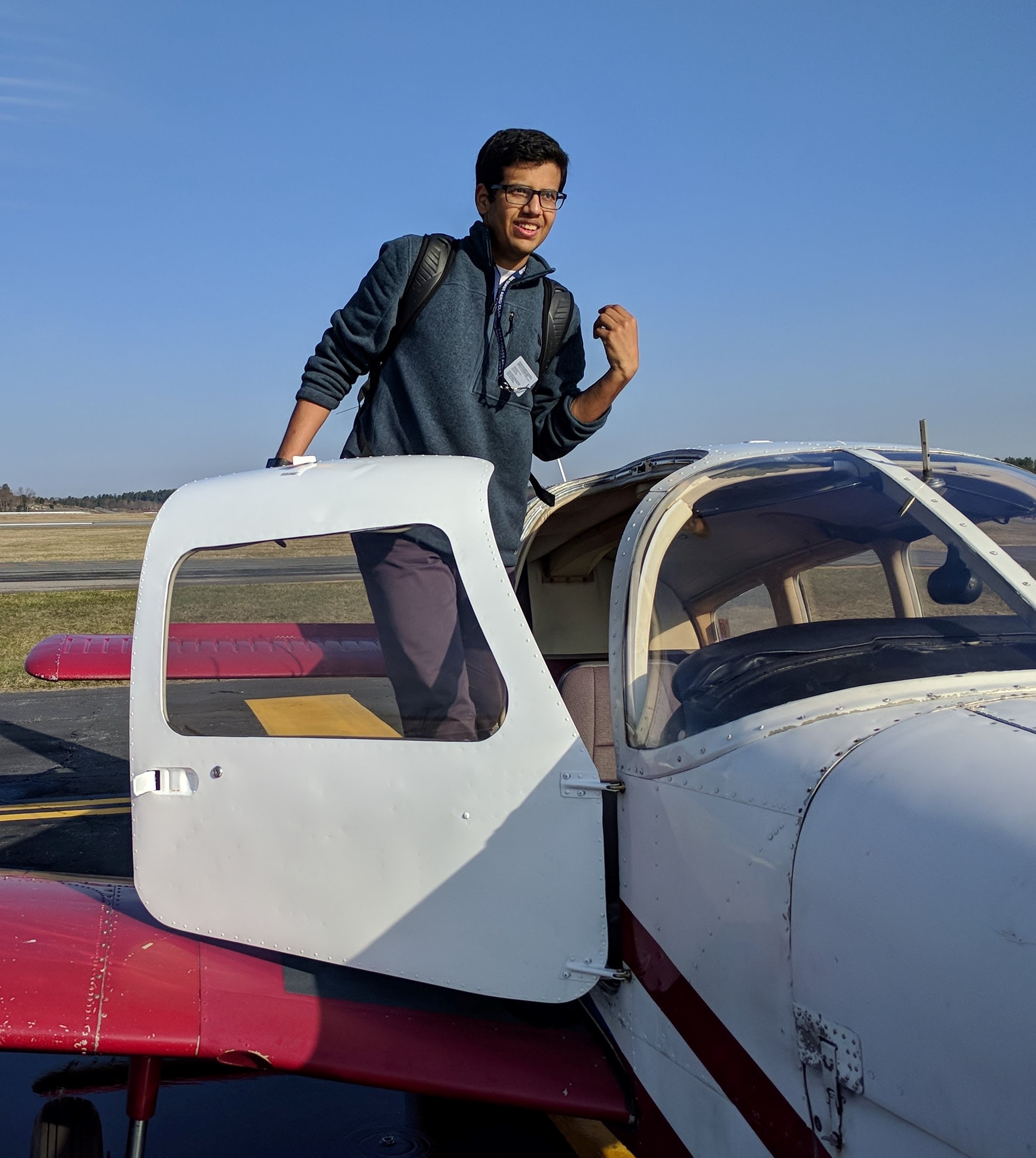
Chinmay is a graduate student pursuing a doctorate in Mechanical Engineering. His current work involves the development of intelligent machines and methods to learn and predict the transport of oceanic pollutants (debris and nutrients on a global scale. He spent four wonderful years at IIT Bombay, India from 2011 until 2017 and received a Master’s in Mechanical Engineering from MIT in 2017. Beyond research, he is also an enthusiastic pilot who is always willing to explore beauty of New England. His other hobbies include endurance biking and playing the drums. He is currently working on: His publications so far include: